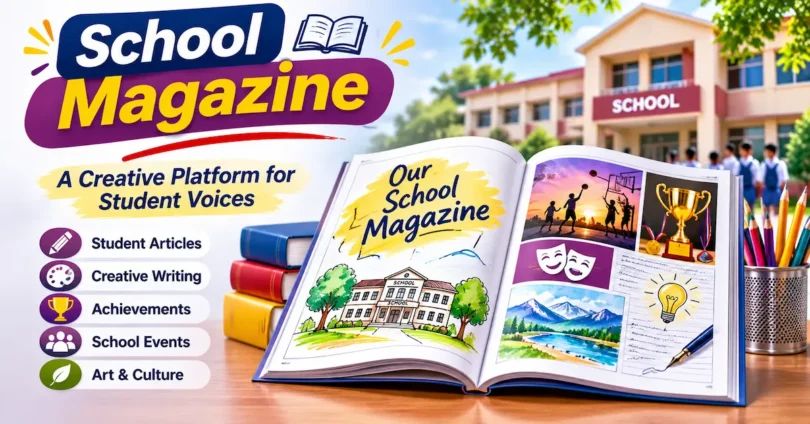

A school magazine is an important part of school life because it gives students an opportunity to express their thoughts, share their creativity, and showcase their talents. Whether you are a student, teacher, or school administrator, a school magazine can help create a positive learning environment. It is more than just a collection of written pages. It is a platform where students can share stories, poems, articles, drawings, achievements, and interesting school activities with others.
If you have ever wondered what makes a school magazine special or how to create one, this guide will help you understand everything in simple words.
What Is a School Magazine?
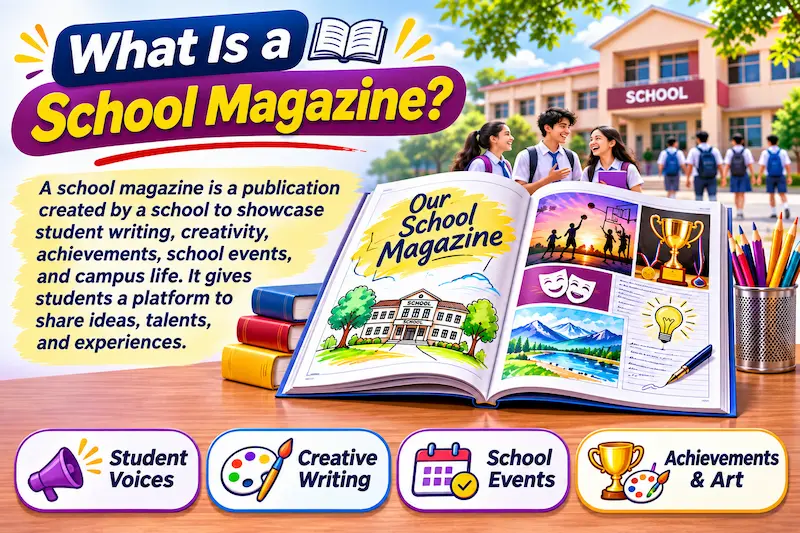
A school magazine is a publication created by a school to highlight students’ creativity, academic achievements, activities, and ideas. It is usually published once a year, twice a year, or monthly, depending on the school’s plans.
It may include different types of content, such as:
- Student-written articles and essays
- Short stories and poems
- School news and announcements
- Educational information
- Drawings, paintings, and photography
- Sports and extracurricular activities
- Teachers’ messages and student achievements
The main purpose of a school magazine is to encourage students to participate in creative and educational activities outside their regular classroom lessons.
Importance of a School Magazine
A school magazine plays an important role in students’ educational and personal development. It encourages young learners to explore their abilities and share their opinions.
Let’s look at some major benefits.
1. Encourages Writing Skills
Writing for a school magazine helps students improve their writing abilities. They learn how to organize ideas, create meaningful sentences, and communicate their thoughts clearly.
Whether someone writes a short story, an essay, or a poem, regular practice can improve their confidence and language skills.
2. Builds Student Confidence
Not every student feels comfortable speaking in front of a large audience. However, contributing to a school magazine gives them another way to express themselves.
Seeing their names and work published can make students feel proud of their efforts and encourage them to participate in more school activities.
3. Promotes Creativity
A school magazine is not limited to academic writing. Students can contribute artwork, photography, jokes, creative stories, and other interesting content.
This allows students to explore their creative abilities and discover talents they may not have recognized before.
4. Develops Reading Habits
When students read articles and stories written by their classmates, they become more interested in reading.
A well-designed magazine can introduce readers to new subjects, interesting facts, educational ideas, and different perspectives.
5. Highlights School Achievements
Schools organize many activities throughout the academic year. A magazine provides an excellent opportunity to highlight these achievements.
It can feature:
- Academic awards
- Sports competitions
- Science exhibitions
- Cultural programs
- Debate competitions
- Art and writing contests
In this way, a school magazine becomes a record of memorable school experiences.
Best Topics to Include in a School Magazine
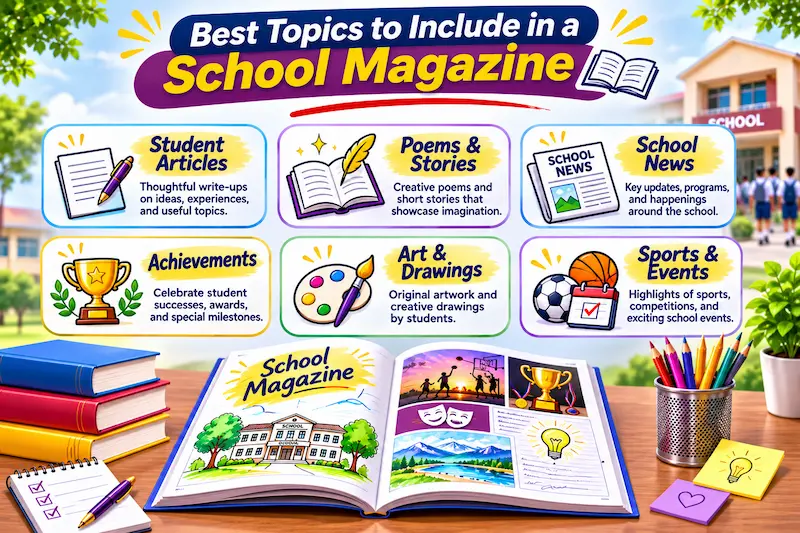
Choosing interesting topics is one of the most important steps when preparing a school magazine. You should include different subjects so that students with different interests can enjoy reading it.
Here are some popular ideas.
Educational Articles
Educational articles help students learn something useful and improve their knowledge.
Some topic ideas include:
- Importance of Education
- Benefits of Reading Books
- How to Protect the Environment
- Importance of Discipline in Student Life
- Role of Technology in Education
- Benefits of Physical Exercise
Short Stories and Poems
Creative writing makes a school magazine more enjoyable. Students can write original short stories, poems, inspirational messages, and fictional adventures.
Teachers can also organize writing competitions to encourage more students to participate.
Science and Technology
Science and technology are interesting subjects for young learners. Including these topics can make the magazine informative and educational.
Possible ideas include:
- Amazing Facts About Space
- How Artificial Intelligence Works
- Interesting Facts About the Human Body
- Importance of Scientific Discoveries
- Future of Technology
Sports and Activities
Sports are an important part of school life. A magazine can include information about school teams, competitions, winning moments, and student experiences.
You can also add short interviews with successful players.
Art and Photography
Not all students enjoy writing, and that is perfectly fine. Some are better at drawing, painting, designing, and photography.
Give these students space to showcase their work. This makes the magazine more colorful and interesting.
How to Create a School Magazine
Creating a school magazine may seem like a difficult task, but it becomes easier when you follow a proper process.
Here are some simple steps to help you get started.
Step 1: Choose a Magazine Theme
First, decide what kind of magazine you want to create. It could focus on education, creativity, science, school activities, or a combination of different subjects.
A clear theme helps you organize the content properly.
Step 2: Create an Editorial Team
Select a small team of students and teachers who can manage different responsibilities.
Your editorial team may include:
- Editor-in-chief
- Assistant editor
- Student writers
- Proofreaders
- Graphic designers
- Photography team
Each member should have a clear responsibility.
Step 3: Collect Articles and Creative Work
Invite students and teachers to submit their work. You can announce writing competitions or request contributions from different classes.
Make sure the submitted content is original, relevant, and suitable for the intended readers.
Step 4: Edit and Organize Content
After collecting the material, review everything carefully.
Correct spelling mistakes, improve sentence structure, and organize articles into suitable sections. Keep the language simple and easy to understand.
Step 5: Design the Magazine
The design of your school magazine should be attractive and reader-friendly.
Use suitable headings, readable fonts, colorful illustrations, and an organized layout. The cover page should include the magazine title, school name, publication year, and an interesting design.
Step 6: Publish and Share
Once the magazine is complete, you can print copies for students and teachers.
You can also create a digital version in PDF format and share it through the school’s communication channels.
You may also like to read this:
Yojana Magazine PDF Download: Complete Guide For Students
Current Affairs Magazine – Stay Updated and Informed
Creative School Magazine Ideas To Inspire Students
Magazine Cover Page Design: Creative Ideas and Examples
Current Affairs Monthly Magazine: Complete Study Guide
School Magazine Cover Page Ideas
The cover page is the first thing readers notice, so it should look attractive and professional.
Here are some creative cover page ideas:
- School Building Theme: Use a beautiful photograph or illustration of the school building.
- Student Creativity Theme: Include drawings, paintings, and artwork created by students.
- Education Theme: Use books, pencils, graduation caps, and other educational elements.
- Nature Theme: Create a colorful design featuring trees, flowers, and environmental elements.
- Future Technology Theme: Use modern graphics representing science, innovation, and technology.
Benefits of Digital School Magazines
Today, many schools are using digital magazines instead of relying only on printed publications.
A digital school magazine is an electronic publication that students and teachers can read on computers, tablets, and smartphones.
Some important benefits include:
- Easy sharing: Students can access the magazine from different locations.
- Lower printing costs: Schools can reduce paper and printing expenses.
- More design options: Digital publications can include colorful graphics and interactive elements.
- Environment-friendly: Less paper consumption can help reduce waste.
- Quick updates: Schools can publish new content more easily.
Both printed and digital magazines can be useful. The right choice depends on the school’s budget, resources, and students’ needs.
Role of Teachers in a School Magazine
Teachers play an important role in making a school magazine successful. They guide students, review submitted content, and help maintain the quality of the publication.
Their responsibilities may include:
- Encouraging students to submit articles.
- Helping students improve their writing.
- Checking grammar and spelling.
- Selecting suitable content.
- Guiding the editorial team.
- Supporting students during the design and publishing process.
With proper guidance from teachers, students can learn valuable skills while enjoying the experience of creating a magazine.
Tips for Making a School Magazine Interesting
If you want students to enjoy reading your magazine, try to make it informative, creative, and engaging.
Here are some useful tips:
- Include contributions from students of different classes.
- Use simple and understandable language.
- Add attractive photographs and illustrations.
- Include interesting facts and educational quizzes.
- Publish interviews with teachers and talented students.
- Highlight school events and achievements.
- Give students opportunities to share their original ideas.
- Avoid making every section too lengthy.
Remember, a good school magazine should offer something interesting for every reader.
Frequently Asked Questions (FAQs)
1. What is the main purpose of a school magazine?
The main purpose of a school magazine is to encourage creativity, improve writing skills, promote reading habits, and showcase students’ talents and school achievements.
2. What should be included in a school magazine?
A school magazine can include articles, poems, short stories, educational information, school news, photographs, artwork, sports updates, and student achievements.
3. Who can contribute to a school magazine?
Students, teachers, school administrators, and sometimes parents can contribute articles, stories, poems, photographs, and other creative content.
4. How often should a school magazine be published?
A school magazine can be published monthly, quarterly, or annually. Many schools prefer an annual magazine because it covers the major events and achievements of the entire academic year.
5. Why is a school magazine important for students?
It helps students develop communication skills, improve creativity, build confidence, develop reading habits, and discover their hidden talents.
Conclusion
A school magazine is much more than a school publication. It is a valuable platform that allows students to express their ideas, improve their skills, and celebrate their achievements. From educational articles and creative stories to photography and sports updates, it brings different talents together in one place.
Whether your school publishes a printed magazine or a digital edition, the most important thing is to encourage students to participate. With creative ideas, proper planning, and support from teachers, a school magazine can become a memorable part of school life and inspire students to learn, write, and create with confidence.